
Attic Mold Inspection · Port Charlotte, Florida
Attic Mold Inspection in Port Charlotte, FL
Dark attic staining, musty odors, ceiling marks and damp insulation can signal a moisture problem above your living space. Attic Medics evaluates accessible attic materials, documents visible conditions and helps Port Charlotte homeowners understand the appropriate next step.
- Attic-Focused Evaluation
- Visible Conditions Documented
- Clear Next-Step Recommendations
Why Port Charlotte homeowners choose Attic Medics

Available 24/7
Call anytime for assistance with attic mold, moisture or odor concerns in Port Charlotte.

25+ Years of Experience
Powered by PuroSystems, a property-restoration provider serving customers for more than 25 years.

IICRC Certified
Professional service guided by recognized restoration-industry standards and established practices.

Attic Inspections for Gulf Coast Homes
Look Beyond the Visible Attic Stain
An attic mold inspection evaluates accessible materials for visible growth, water staining, dampness, condensation and other evidence that may help explain an attic concern.
Port Charlotte homes face humid outdoor air, frequent heavy rain and a long cooling season. Moisture may enter through roofing defects, collect around cool ductwork or move into the attic through gaps around fixtures, wiring and access openings.
Water can also travel along decking, framing or insulation before it becomes visible below the ceiling. The location of a stain therefore may not reveal where the moisture originally entered.
Attic Medics evaluates accessible roof decking, framing, insulation, ducts and airflow pathways together. If growth is confirmed, the findings can help determine whether attic mold cleanup and remediation should be considered. If condensation or airflow appears to be the primary issue, an attic moisture and ventilation evaluation may be recommended.
- Accessible attic materials visually evaluated
- Water staining and condensation indicators documented
- Insulation, ductwork and airflow conditions considered
- Findings and practical next steps explained
Reasons to Check the Attic
Conditions That May Warrant an Attic Mold Inspection
An attic inspection may be appropriate after a roof leak, storm, unexplained odor, ceiling stain or discovery of damp or discolored attic materials.
Irregular Decking Stains
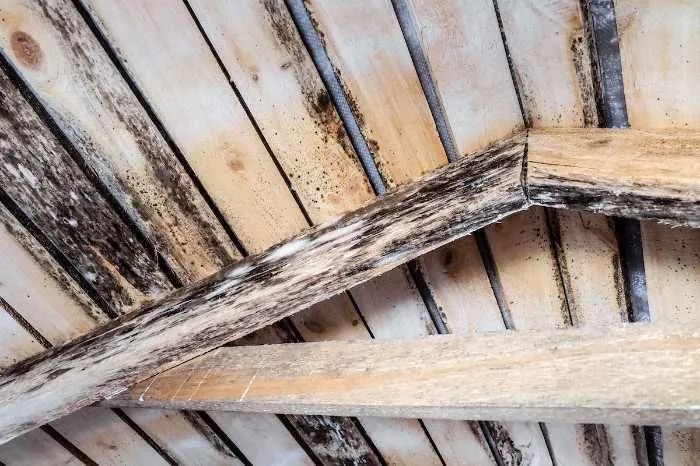
Dark, light or uneven areas on roof decking and framing may be associated with moisture, previous leakage or microbial growth.
Odors Near Ceilings or Closets
A musty smell near an attic access, air vent or ceiling opening may indicate that attic air is entering the living space.
Signs of Storm Intrusion
Water marks following wind-driven rain may indicate that roofing, flashing or another exterior opening allowed moisture into the attic.
Wet or Matted Insulation
Insulation that appears compressed, damp or discolored may be holding moisture from a leak or condensation event.
Moisture Around HVAC Components
Condensation near ducts or attic-mounted equipment may point to damaged insulation, air leakage or elevated attic humidity.
Concerns Raised During a Home Inspection
A general inspection may identify attic staining, questionable growth or ventilation concerns that deserve a more focused evaluation.
Inspection Scope
What We Evaluate Inside the Attic
We examine accessible attic areas for visible growth, moisture patterns and building conditions that may help explain staining, odors, condensation or damp materials.
Roof Decking & Framing
Accessible plywood, OSB, rafters, trusses and other structural surfaces are evaluated for staining and visible concerns.
Water & Condensation Evidence
We look for moisture marks, corrosion, damp materials and evidence of current or previous water intrusion.
Insulation, Ducts & Airflow
Accessible insulation, ductwork, ventilation pathways and visible air-leakage concerns are considered together.
Recommended Direction
We explain the visible findings and the available options for moisture correction, additional assessment or remediation.
Inspection is limited to visible and accessible areas. A visual attic inspection is not laboratory testing or a formal mold assessment. When either is required, an appropriately licensed mold assessor may need to perform that service.
Our Inspection Process
Turn an Attic Concern Into an Actionable Plan
We begin with the condition that prompted your concern, inspect the accessible attic and explain which findings may require correction, additional assessment or remediation.
Review the History
We discuss odors, water marks, storm events, roof repairs, HVAC issues and other changes that may be relevant.
Inspect the Accessible Attic
We evaluate visible surfaces and look for growth, staining, condensation, damp materials and related building conditions.
Explain the Options
We review what was observed and discuss whether moisture correction, formal assessment or attic mold remediation should be considered.
Common Questions
Port Charlotte Attic Mold Inspection FAQs
Clear answers about visible attic mold, water staining, musty odors and moisture concerns.
What should make me concerned about attic mold?
Warning signs may include irregular roof-deck discoloration, damp insulation, musty odors, ceiling stains and condensation near ducts or metal fasteners. These signs do not confirm mold, but they justify a closer evaluation.
Does every dark attic stain indicate mold?
No. Old water stains, dust, soot and previous condensation can resemble microbial growth. The surrounding attic conditions should be evaluated before deciding what the mark represents.
Does an attic mold inspection include laboratory testing?
Laboratory sampling is not automatically part of a visual attic inspection. If formal mold assessment or testing is needed, it may have to be completed by an appropriately licensed mold assessor.
Can attic mold develop after a storm even if the roof was repaired?
It can. Roof repairs may stop additional water, but insulation, decking or framing can remain damp after the original event. Those materials should be evaluated when staining, odors or other concerns continue.
Can there be attic moisture without a roof leak?
Yes. Condensation, damaged duct insulation, indoor air escaping through ceiling openings and restricted ventilation can introduce attic moisture without active roof intrusion.
What happens if visible mold or excess moisture is found?
We explain the accessible findings and discuss the next step. Depending on the conditions, that may include moisture and ventilation correction , additional assessment or attic mold cleanup and remediation .
Can a musty odor come from the attic?
Yes. Odors can move through attic access points, ducts, ceiling penetrations and closets. A musty odor investigation can help identify likely attic-related contributors.
Get Clear Answers
Concerned About Your Port Charlotte Attic?
Request an attic inspection to better understand the visible materials, moisture indicators and practical next steps for your home.