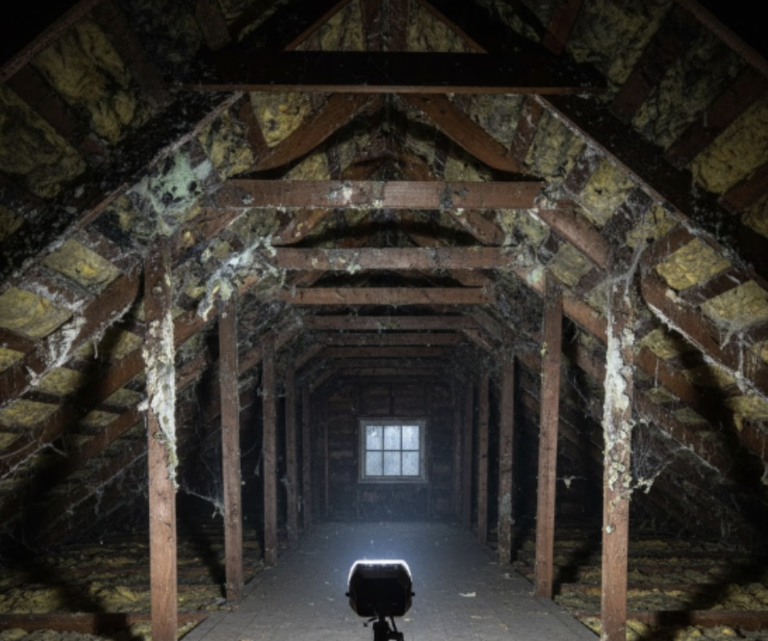
Correcting an attic moisture or ventilation problem may cost anywhere from a few hundred dollars for a localized repair to several thousand dollars when the project involves ductwork, wet insulation, roof repairs or mold remediation. The final cost depends less on the symptom and more on what is causing the moisture.
Quick Answer
There is no single price for correcting attic moisture because “attic moisture” is not one specific repair. One home may need a bathroom exhaust duct reconnected. Another may require roof work, duct insulation, removal of wet insulation and professional mold remediation.
The most cost-effective first step is identifying the moisture source before purchasing vents, fans, insulation or treatment services.
How Much Does It Cost to Correct Attic Moisture?
A localized ventilation or duct repair may remain in the hundreds of dollars. Larger projects that include multiple trades can reach several thousand dollars because the work may involve separate inspection, roofing, HVAC, insulation and remediation scopes.
The following national ranges are provided only for early budgeting. They are not Attic Medics pricing or a quote for a Venice home.
| Possible Project Component | General National Planning Range | What May Affect the Price? |
|---|---|---|
| Basic attic ventilation installation or correction | Approximately $300–$2,500 | Vent type, roof design, intake requirements and access |
| Attic ductwork repair | Approximately $200–$1,500 | Number of damaged sections, duct material and accessibility |
| Ductwork insulation | Approximately $1,000–$2,700 | Duct length, insulation value, vapor barrier and labor |
| Attic insulation removal | Approximately $1–$2 per square foot | Material type, depth, contamination, access and disposal |
| Insulation removal and replacement | Approximately $2–$6 per square foot | Required insulation level, air sealing and material selected |
| Attic mold remediation | Frequently $1,000–$4,000; extensive projects may cost more | Affected area, containment, access, insulation and damaged materials |
| Roof, flashing or exterior water-entry repairs | Requires a property-specific quote | Roofing material, pitch, damage and location of the leak |
| Post-remediation assessment or verification | Requires a scope-specific quote | Inspection requirements, sampling and laboratory turnaround |
Eight Factors That Affect Attic Moisture and Ventilation Costs
1. The Actual Source of the Moisture
The source is the largest cost variable because it determines which trade and repair are necessary.
Attic moisture may come from:
- A roof or flashing leak
- Wind-driven rain entering through roof vents
- A bathroom exhaust fan terminating in the attic
- Condensation on air-conditioning ducts
- A clogged or damaged HVAC condensate system
- Uncontrolled air leakage through the ceiling
- Wet insulation from an earlier water event
- An incompatible attic ventilation design
These problems can create similar water stains but require very different repairs. Reconnecting an exhaust duct is not priced like repairing a roof, and replacing one damaged duct section is not priced like redesigning an attic assembly.
Our attic moisture and ventilation evaluation in Venice is designed to help identify likely contributors before corrective work is planned.
2. The Size of the Affected Area
A small area of damp insulation below one duct connection generally requires less labor and material than moisture distributed across the entire attic.
Project size may affect:
- The amount of insulation removed
- The number of vents or ducts repaired
- The extent of drying and moisture monitoring
- The containment required for mold remediation
- The amount of replacement material
- The time required to move equipment through the attic
Square footage alone does not determine price. A small but difficult area near the roof edge may require more labor than a larger, easily accessible section.
3. Attic Access and Working Conditions
Attics with large access openings, walking platforms and adequate clearance are generally easier to inspect and service. Labor can increase when technicians must work around low roof slopes, deep insulation, trusses, mechanical equipment or limited access.
Accessibility factors include:
- Size and location of the attic opening
- Roof pitch and available headroom
- Distance from the access point to the affected area
- Presence of fragile ceiling surfaces
- Stored belongings or construction debris
- Electrical, HVAC and plumbing obstructions
- The need for specialized removal equipment
Hard-to-reach areas may require slower work and additional protection to prevent damage to the ceiling below.
4. The Existing Attic and Ventilation Design
A conventional vented attic and an unvented or conditioned attic control heat, air and moisture differently. The cost of correction depends on what the attic was designed to do and whether its air and thermal boundaries remain continuous.
A simple blocked soffit opening may be inexpensive to correct. A partially converted attic with spray foam in one area, open vents in another and ductwork crossing between sections may require a more detailed building-science evaluation.
Adding more roof vents is not automatically the least expensive or most effective answer in Florida. Humid outdoor air entering the attic may contribute to condensation on cold HVAC ducts.
Read 7 Attic Ventilation Problems That Can Lead to Moisture and Mold before assuming the home only needs another fan or vent.
5. Roof and Exterior Repairs
If the moisture originates from the roof, remediation and ventilation work cannot substitute for repairing the water-entry point.
Roof-repair costs vary according to:
- Roofing material
- Roof pitch and height
- Flashing and penetration details
- Storm or wind damage
- The condition of roof decking
- Whether damage is localized or widespread
- Permit and contractor requirements
Repairing the source early may prevent a smaller insulation or moisture problem from becoming a larger remediation and reconstruction project.
6. HVAC and Ductwork Involvement
Condensation around ducts may require an HVAC contractor to repair air leaks, insulation, vapor barriers, drain pans, condensate lines or equipment problems.
Current national cost guides place many attic duct repairs between several hundred dollars and approximately $1,500, while system-wide insulation or replacement can cost more.[1]
The EPA recommends that ductwork in non-air-conditioned spaces be properly sealed and insulated to help prevent condensation.[2]
If your ducts are collecting water, read Why Is My AC Ductwork Sweating in the Attic?
7. Insulation Removal and Replacement
Not every moisture problem requires removal of all attic insulation. Localized wet material may require a limited scope, while widespread water, contamination or difficult access can make a larger removal necessary.
Insulation cost is affected by:
- The attic’s total square footage
- Insulation type and depth
- Whether the material is wet or contaminated
- Removal, bagging and disposal requirements
- Whether air sealing is performed before replacement
- The desired insulation value
- The number of obstructions and difficult work areas
National planning guides commonly place ordinary insulation removal around $1 to $2 per square foot and removal with replacement around $2 to $6 per square foot.[3] Actual Venice-area pricing may differ.
8. Mold Remediation and Post-Remediation Work
When visible mold growth is present, the project may require containment, removal of affected porous material, cleaning of structural surfaces, specialized equipment and post-remediation verification.
Remediation cost can increase when:
- Growth covers a large area
- Insulation must be removed for access
- The attic has limited headroom
- Several roof sections are affected
- Materials remain wet
- Independent assessment or verification is required
- Roof decking or ceiling materials need replacement
National estimates commonly place attic mold remediation between approximately $1,000 and $4,000, with extensive projects potentially exceeding that range.[4] A site-specific scope is required before reliable pricing can be provided.
Learn more about attic mold remediation in Venice and the factors that affect attic mold-remediation cost .
Why Might an Attic Project Require Multiple Contractors?
Moisture problems frequently cross professional boundaries. One company may identify the conditions without being the appropriate contractor to perform every repair.
| Condition Identified | Professional That May Be Needed |
|---|---|
| Roof or flashing leak | Qualified roofing contractor |
| Sweating, leaking or damaged AC ducts | Qualified HVAC contractor |
| Electrical penetrations or equipment concerns | Licensed electrician |
| Visible mold or affected materials | Qualified mold assessor or remediator, as applicable |
| Wet or damaged attic insulation | Insulation or attic-restoration contractor |
| Moisture source is uncertain | Attic moisture and mold inspection professional |
A coordinated scope may cost more than one isolated repair, but it can prevent money from being spent on a solution that addresses only the visible symptom.
How to Compare Attic Moisture and Ventilation Quotes
Two estimates may appear dramatically different because they include different work. Ask each contractor to clearly identify:
- The moisture source they believe is causing the problem
- The evidence supporting that conclusion
- The exact materials and areas included in the scope
- Whether insulation removal and disposal are included
- Whether new insulation is included
- Whether roof or HVAC repairs are excluded
- Whether mold assessment or verification is included
- Who is responsible for permits and inspections
- What conditions could result in a change order
- What warranty applies to the completed work
Compare scopes—not only totals. A low quote that excludes drying, insulation replacement or moisture-source repair may not be comparable to a comprehensive proposal.
How to Avoid Paying for Unnecessary Attic Work
- Start with the cause. Do not purchase a fan, vent or insulation package solely because the attic feels hot.
- Ask for photographs and moisture findings. The proposed repair should be connected to observable conditions.
- Do not assume all insulation must be removed. Ask which materials are wet, damaged or preventing access.
- Separate HVAC repairs from mold remediation. Understand which contractor is responsible for each part.
- Correct water entry before restoration. New insulation should not be installed beneath an active leak.
- Avoid one-size-fits-all ventilation upgrades. Vented and unvented attics require different approaches.
- Get another opinion for a major scope. This is especially useful when complete insulation removal or attic redesign is recommended.
If the attic has a persistent odor but no obvious source, a musty-odor investigation may help narrow the problem before extensive work is authorized.
Frequently Asked Questions
How much does attic ventilation repair cost?
Basic vent corrections may cost a few hundred dollars, while a larger ventilation project involving soffits, ridge vents, roofing or powered equipment can cost several thousand. The attic design and actual moisture source determine the appropriate scope.
Is an attic fan the cheapest way to fix moisture?
It may not fix the problem at all. A fan cannot repair a roof leak, reconnect an exhaust duct, replace wet insulation or seal leaking AC ducts. Powered fans can also alter pressure and airflow within the attic.
Does wet attic insulation always need to be replaced?
The decision depends on the insulation type, amount of water, contamination and whether it can be completely dried without losing performance. Wet or mold-affected duct insulation may require replacement by an HVAC professional.
Does attic moisture correction include mold remediation?
Not automatically. Correcting a leak or ventilation problem stops the moisture source, but existing mold and affected materials may require a separate remediation scope.
Will homeowners insurance cover attic moisture repairs?
Coverage depends on the policy and cause of the loss. Sudden storm damage may be treated differently from long-term condensation, maintenance problems or gradual leaks. Contact the insurer before assuming coverage applies.
Why do two attic-moisture estimates differ so much?
The estimates may include different repairs. One may cover only a vent installation, while another includes insulation removal, air sealing, remediation and replacement materials. Compare line-item scopes before comparing totals.
How do I get an accurate estimate for my Venice home?
Begin with an inspection of the accessible attic conditions. A reliable estimate requires identifying the source, affected materials, attic design, access limitations and which professional trades are needed.
Start With an Attic Moisture Evaluation
Attic Medics helps Venice homeowners evaluate accessible attic moisture, ventilation, insulation and mold conditions. We’ll explain what we observe and help identify the appropriate next step before you invest in a major repair.
Explore all attic mold services in Venice, Florida.
References
- Angi, How Much Does Ductwork Repair Cost? 2026 Data
- U.S. Environmental Protection Agency, Should You Have the Air Ducts in Your Home Cleaned?
- HomeGuide, Attic Insulation Removal Cost
- Angi, How Much Does Mold Remediation Cost? 2026 Data
- U.S. Department of Energy, HVAC: Sealed and Insulated Metal Ducts