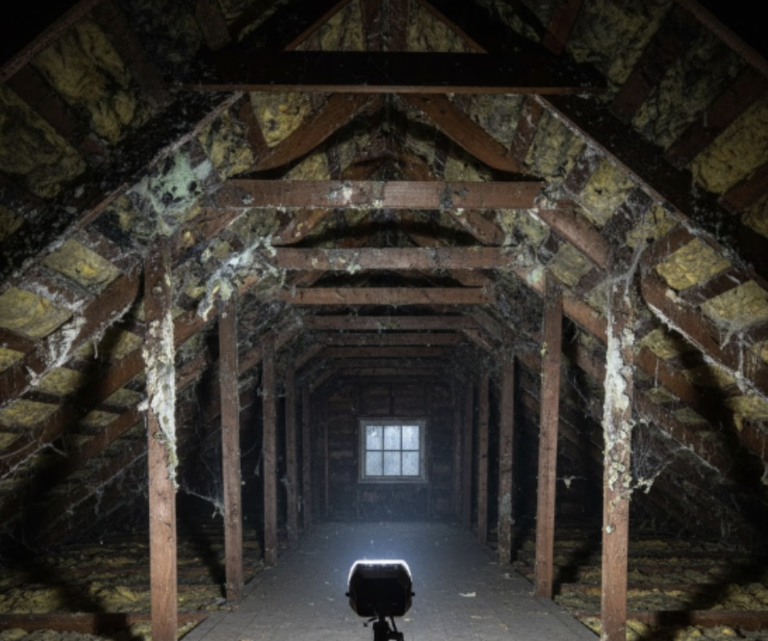
Attic ventilation problems can contribute to elevated moisture, condensation and mold growth—but the solution is not always adding more vents. In Venice and other hot, humid Florida communities, the attic must be evaluated as a complete system that includes ventilation, insulation, air sealing, ductwork and roof conditions.
Quick Answer
Common attic ventilation problems include blocked soffit vents, unbalanced intake and exhaust openings, bathroom fans terminating in the attic, humid air reentering through soffits, leaking HVAC ducts, ceiling air leaks and incompatible vented and unvented attic designs.
These problems can introduce moisture, restrict intended airflow or create cold surfaces where humid air condenses. A proper diagnosis should identify the moisture source before vents, fans or insulation are added.
How Does Attic Ventilation Contribute to Moisture and Mold?
Mold requires moisture. Roof decking, wood framing, insulation dust and other attic materials can support growth when they remain damp or are repeatedly exposed to condensation.
Ventilation is intended to help manage heat and moisture, but its performance depends on the attic design and climate. Air moving through the wrong pathways may introduce humid outdoor air, pull conditioned air from the house or cause moisture to collect on cold ducts and other surfaces.
Research on hot-humid climates has shown that traditional attic ventilation does not always improve moisture performance. Florida homes must be evaluated according to their specific roof assembly, HVAC layout, insulation and air boundary.[1]
Seven Attic Ventilation Problems That May Contribute to Mold
1. Bathroom Exhaust Fans Terminating Inside the Attic
Bathroom exhaust fans remove warm, moisture-laden air from the living space. That air should be carried through a sealed duct and discharged outdoors.
When a bathroom fan terminates inside the attic, shower moisture is repeatedly released near wood framing, insulation and roof decking. Over time, these materials may remain damp long enough to support mold growth.
Common problems include:
- A duct that ends openly inside the attic
- A disconnected or crushed flexible duct
- Loose connections around the fan or roof termination
- A duct installed without an actual exterior outlet
- Condensation developing inside an improperly installed duct
The EPA recommends that exhaust ducts terminate outdoors rather than in unconditioned spaces such as attics.[2]
2. Exhaust Air Discharging Near a Ventilated Soffit
An exhaust duct may technically terminate outside and still create a moisture problem. If humid exhaust is released directly beneath a ventilated soffit, that air can rise and be drawn back into the attic through nearby intake openings.
EPA moisture-control guidance specifically cautions against directing exhaust air through ventilated soffits because the humid air may reenter the attic and contribute to mold growth on the underside of the roof.[2]
Exterior terminations should be evaluated for their position relative to soffit vents, roof overhangs, windows and other air-intake openings.
3. Blocked or Covered Soffit Vents
In a traditionally vented attic, soffit openings commonly provide intake air. These openings can become blocked by insulation, paint, debris, insect nests or improperly installed vent baffles.
When intended intake paths are restricted, the attic’s airflow pattern may no longer function as designed. Exhaust openings near the roof peak cannot create balanced airflow when replacement air cannot enter through the intended lower vents.
Warning signs may include:
- Insulation packed tightly against the roof edge
- Missing, collapsed or displaced ventilation baffles
- Soffit panels that were painted closed
- Debris or pest material covering vent openings
- Different sections of the roof with inconsistent intake ventilation
Clearing an opening is not always sufficient. The intake and exhaust system should be examined together to determine how air is actually moving through the attic.
4. Unbalanced Intake and Exhaust Ventilation
A vented attic typically relies on lower intake openings and higher exhaust openings. If the attic has too little intake, poorly distributed exhaust or vents that serve only part of the roof, airflow may short-cycle or bypass areas where moisture is accumulating.
Problems can develop when:
- Ridge vents are installed without adequate intake ventilation
- Multiple exhaust systems interfere with one another
- Roof additions create isolated attic sections
- Hip roofs have limited high-level exhaust capacity
- Firewalls or framing prevent airflow between attic sections
Mold appearing in one section of an otherwise dry attic may indicate a localized roof, duct or airflow problem rather than insufficient ventilation throughout the entire structure.
5. Powered Attic Fans Changing the Intended Airflow
Powered attic fans can move substantial amounts of air. Without adequate intake openings and good air sealing between the house and attic, a fan may pull conditioned air through ceiling penetrations instead of drawing all replacement air from outdoors.
This can increase air movement through attic hatches, recessed lights, plumbing penetrations and other gaps. It may also affect the home’s energy use and pressure balance.
A powered fan should not be treated as an automatic solution to attic humidity. The source of the moisture and the available replacement-air pathways should be evaluated first.
6. Leaking or Poorly Insulated HVAC Ductwork
Many Florida homes have air-conditioning equipment or ductwork inside the attic. Cold duct surfaces surrounded by warm, humid attic air can develop condensation when insulation or vapor barriers are damaged.
Supply-air leaks may also cool nearby surfaces below the surrounding air’s dew point, while return leaks can pull hot, humid attic air into the HVAC system. The EPA recommends properly sealing and insulating ducts located in unconditioned spaces to help prevent condensation and moisture contamination.[3]
Conditions to investigate include:
- Torn or missing duct insulation
- Condensation on metal boots and connections
- Loose supply or return-air joints
- Wet insulation beneath ducts
- Standing water near an air handler or drain pan
- Dark staining around cold HVAC components
HVAC condensation can resemble a roof leak. Moisture patterns should be investigated before deciding which contractor or repair is needed.
7. Mixing Vented and Unvented Attic Strategies
Vented and unvented attics manage heat, air and moisture differently. A problem can develop when a home is partially converted without maintaining a continuous air and thermal boundary.
Examples include:
- Spray foam added to only part of the roof deck
- Existing soffit vents left open after an attic is encapsulated
- A sealed attic connected to an actively vented roof section
- Insulation split between the attic floor and roofline without a clear design
- Additions that use a different attic assembly than the original home
Newer research continues to examine unvented attic designs for hot-humid climates. These systems can perform successfully when the air barrier, insulation, ductwork and moisture-management details are designed to work together.[4]
Problems are more likely when individual components are changed without considering the complete building system.
| Problem | Possible Moisture Effect | What Should Be Evaluated? |
|---|---|---|
| Bathroom fan vents into attic | Repeated introduction of warm, humid air | Duct routing, connections and exterior termination |
| Exhaust near soffit intake | Humid air may reenter the attic | Termination position and nearby intake openings |
| Blocked soffit vents | Restricted intended airflow | Insulation, baffles, paint and debris |
| Unbalanced venting | Dead zones or unintended airflow pathways | Complete intake and exhaust layout |
| Powered attic fan | May pull air through ceiling leaks | Intake capacity, pressure and air sealing |
| Leaking HVAC ducts | Condensation and wet insulation | Duct seals, insulation, drain pans and equipment |
| Mixed attic designs | Uncontrolled heat, air and moisture movement | Continuity of air and thermal boundaries |
Warning Signs of an Attic Moisture Problem
Ventilation problems are not always obvious from outside the home. Homeowners may first notice secondary signs inside the attic or living space.
- Dark spotting on roof decking, trusses or rafters
- Musty odors near the attic access
- Condensation on ducts, pipes or metal fasteners
- Rust on nails, straps or HVAC components
- Compressed, stained or damp insulation
- Water marks that do not follow a clear roof-leak pattern
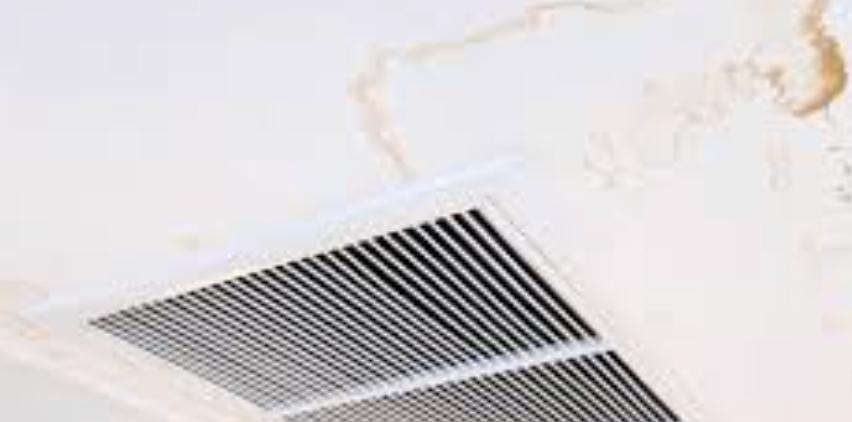
- Ceiling stains near exhaust fans or air-conditioning vents
- Moisture concentrated in only one section of the attic
These conditions do not confirm mold by themselves. An attic mold inspection can help identify visible growth, damp materials and likely moisture pathways.
Is More Attic Ventilation Always Better in Florida?
No. More ventilation is not automatically better in a hot, humid climate. Outdoor air may contain enough moisture to create condensation when it contacts cold air-conditioning ducts or other cooled attic surfaces.
Building Science Corporation research examining Florida attics found that humid outdoor air can contribute to condensation on cold attic surfaces—particularly supply ducts.[1]
The correct approach depends on whether the attic was designed as:
- A traditional vented attic with insulation at the ceiling plane
- An unvented or conditioned attic with insulation at the roofline
- A hybrid or modified attic requiring further evaluation
Before adding ridge vents, turbines, gable fans or powered exhaust fans, determine where the attic’s air and thermal boundaries are located and what is actually producing the moisture.
What Should an Attic Moisture and Ventilation Evaluation Include?
A useful evaluation should look beyond vent counts. Depending on the home’s construction, accessible conditions may include:
- Roof decking, framing and visible water stains
- Soffit, ridge, gable and roof ventilation openings
- Vent baffles and insulation placement near the roof edge
- Bathroom and kitchen exhaust-duct routing
- Air-conditioning ducts, insulation and connections
- Air-handler drain pans and condensate lines
- Attic hatches and visible ceiling penetrations
- Signs of condensation on metal and HVAC components
- Differences between additions and original attic sections
- Visible mold-like growth or musty odors
Attic Medics provides attic moisture and ventilation services in Venice to help homeowners identify likely moisture contributors and understand the appropriate next steps.
If visible growth is already present, the attic may also require professional attic mold remediation . Correcting ventilation without addressing existing affected materials is not a complete remediation strategy.
Read Can Attic Mold Come Back After Remediation? to learn why moisture control remains important after the work is completed.
Frequently Asked Questions
Can poor attic ventilation cause mold?
Poor or incompatible airflow can contribute to moisture conditions that support mold growth. However, ventilation is only one possible factor. Roof leaks, duct condensation, exhaust fans and ceiling air leakage should also be evaluated.
Will installing a ridge vent eliminate attic mold?
Not by itself. A ridge vent requires an appropriate attic design and sufficient intake airflow. It will not repair roof leaks, correct wet insulation, seal leaking ducts or remove existing mold growth.
Should bathroom fans vent through the roof or an exterior wall?
The duct should terminate outdoors using an appropriate exterior outlet. The exact route depends on the building design, applicable requirements and the ability to prevent humid exhaust from reentering nearby attic vents.
Can air-conditioning ducts cause attic moisture?
Yes. Cold ducts may collect condensation when their insulation or vapor barrier is damaged. Leaking ducts can also create cold surfaces or pull humid attic air into the HVAC system.
Can too much attic ventilation be a problem in Florida?
Uncontrolled ventilation may introduce additional humid outdoor air. The attic should be evaluated according to its vented or unvented design rather than assuming that additional airflow is always better.
How can I tell whether soffit vents are blocked?
From inside the attic, a professional may examine whether insulation, paint, debris or missing baffles are restricting the intended openings. Access limitations and low roof edges can make some areas difficult to inspect safely.
Does attic mold mean the entire ventilation system must be replaced?
No. The necessary correction depends on the actual source and extent of the problem. A localized duct disconnection requires a different solution than a poorly designed attic conversion or widespread roof leakage.
Concerned About Attic Moisture or Ventilation?
Attic Medics helps Venice homeowners evaluate accessible attic airflow, moisture, insulation, duct and mold conditions. We’ll explain what we observe and help you understand the appropriate next step for your home.
Explore all attic mold services in Venice, Florida.
References
- Building Science Corporation, Vented and Sealed Attics in Hot Climates
- U.S. Environmental Protection Agency, Moisture Control Guidance for Building Design, Construction and Maintenance
- U.S. Environmental Protection Agency, Should You Have the Air Ducts in Your Home Cleaned?
- Building Science Corporation, Moisture Performance of Unvented Attics in Hot, Humid Climates
- Florida Department of Health, Indoor Mold and Your Health