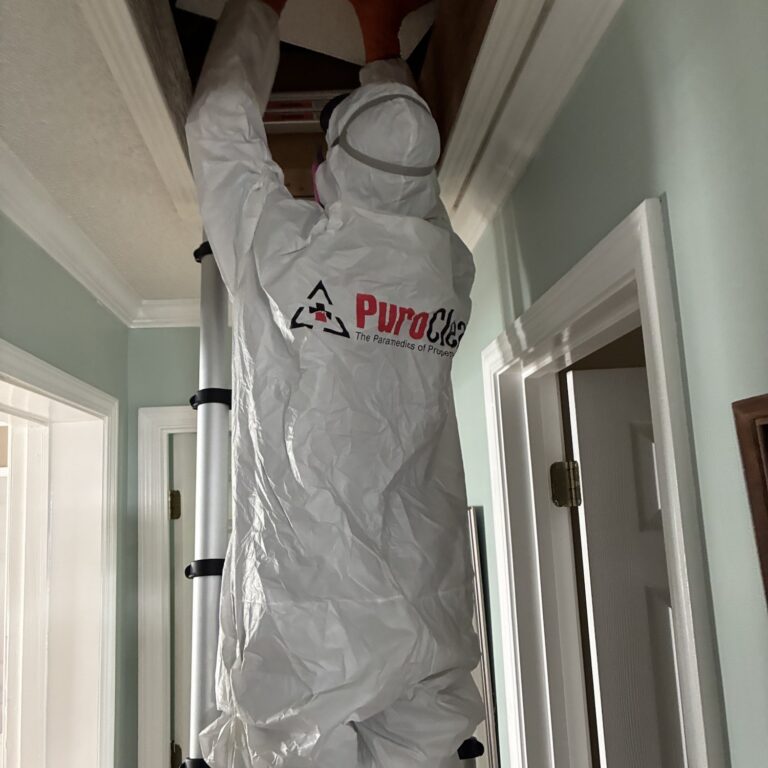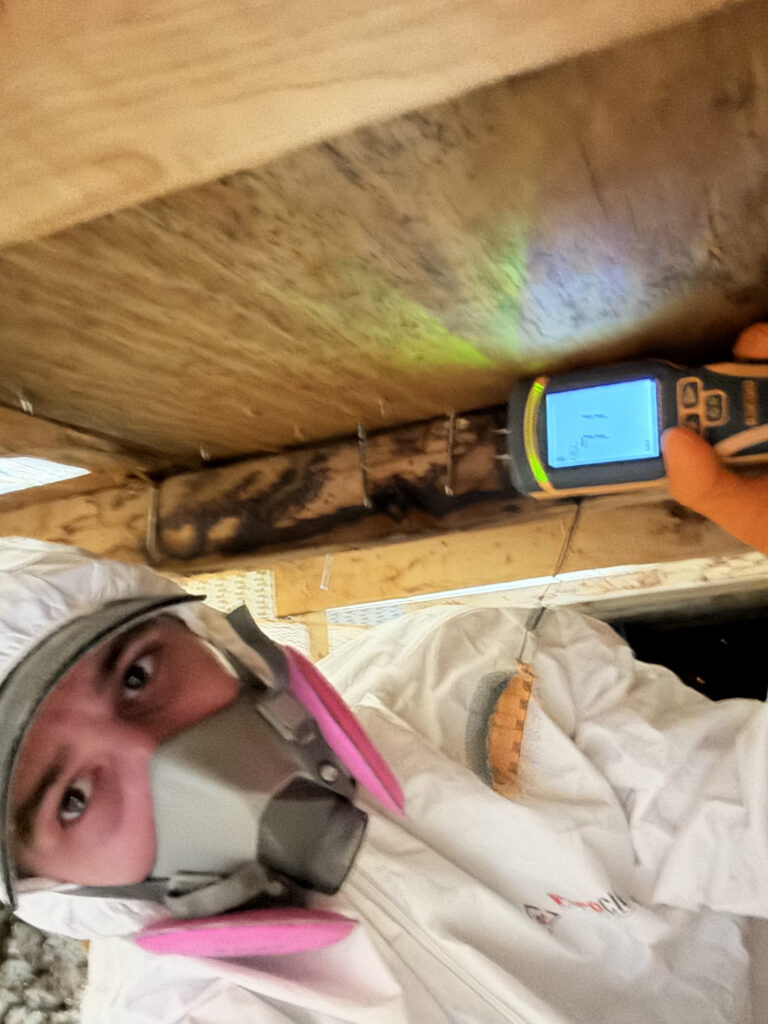
A professional attic mold inspection involves more than looking for dark spots on roof decking. The inspector should evaluate accessible attic materials, moisture conditions, ventilation, insulation and other factors that may have allowed suspected growth to develop.
What Happens Before the Attic Inspection?
A useful inspection begins with questions. Before entering the attic, the inspector should learn what prompted the appointment and whether the home has experienced conditions that could introduce moisture.
You may be asked about:
- Musty or earthy odors
- Visible ceiling or wall stains
- Known roof leaks or previous roof repairs
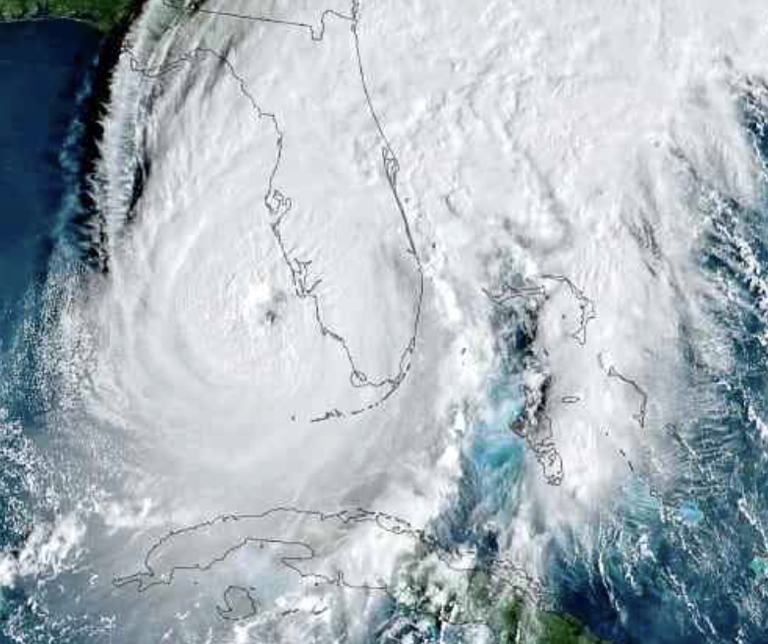
- Recent tropical storms or wind-driven rain
- Plumbing or HVAC leaks
- Condensation on attic ductwork
- Previous mold cleaning or remediation
- Bathroom fans or exhaust ducts entering the attic
- Changes in indoor humidity
- When and where the concern was first noticed
This history helps the inspector focus on relevant areas while looking for connections between visible attic conditions and past moisture events. EPA guidance recommends investigating previous water problems and complaints of damp or musty odors when evaluating a building for mold.[3]
What Happens During the Attic Mold Inspection?
1. The attic access and surrounding area are reviewed
The inspector first evaluates whether the attic can be entered safely. Access may be limited by low clearance, unstable surfaces, exposed wiring, damaged framing, heavy storage or mechanical equipment.
The area around the attic opening may also provide clues. Staining, condensation, odors or damaged finishes near the access can help establish where further investigation is needed.
2. Accessible roof decking and framing are examined
The inspector visually evaluates accessible roof decking, rafters, trusses and other structural materials for irregular staining, suspected growth and evidence of water movement.
Areas receiving particular attention may include:
- Roof valleys and transitions
- Plumbing vents and other roof penetrations
- Skylights, chimneys and flashing
- Eaves and exterior wall connections
- Fasteners extending through the roof deck
- Areas above visible ceiling stains
- Previously repaired roof sections
3. Insulation conditions are observed
Accessible insulation is reviewed for signs of water exposure, compression, displacement and uneven coverage. Wet insulation may look darker, matted or flattened compared with the surrounding material.
Insulation can also block ventilation openings or conceal water damage. An inspector should avoid unnecessary disturbance, particularly when suspected growth or contaminated materials are present.
4. Visible signs of moisture are documented
Because mold requires moisture, the inspection should look for both current and historical water indicators. These can include:
- Active leaks or wet building materials
- Water rings, streaks or tide marks
- Condensation on ducts, pipes or fasteners
- Rust or corrosion on metal components
- Damaged or missing duct insulation
- Wet or discolored insulation
- Elevated moisture readings in accessible materials
Florida’s Department of Health identifies roof leaks, condensation, elevated humidity, plumbing problems and poor venting as common sources of indoor moisture.[2]
5. Attic ventilation is reviewed
The inspector evaluates visible components of the attic ventilation system and looks for conditions that may restrict intended airflow.
This may include checking for:
- Soffit vents covered by insulation
- Missing or displaced ventilation baffles
- Damaged roof or ridge vents
- Uneven intake and exhaust ventilation
- Localized staining around ventilation openings
- Unsealed air pathways from the living space
Ventilation is only one part of attic moisture control. The correct solution depends on the roof assembly, insulation, ductwork, mechanical equipment and how the attic interacts with the conditioned portion of the home.
When humidity, condensation or airflow is the primary concern, our attic moisture and ventilation services in Venice can help identify contributing conditions.
6. Ductwork and mechanical components are observed
Many Florida homes contain ductwork or air-handling equipment in the attic. Accessible components may be reviewed for condensation, damaged insulation, drainage problems and visible moisture.
The inspector may observe:
- Condensation on supply ducts or metal connections
- Torn, compressed or missing duct insulation
- Moisture near an air handler or drain pan
- Staining below mechanical equipment
- Disconnected bathroom exhaust ducts
- Air leakage around ceiling penetrations
An attic mold inspector is not necessarily diagnosing or repairing the HVAC system. If a mechanical defect is suspected, evaluation by a qualified HVAC professional may also be recommended.
7. Notable conditions are photographed
Photographs help homeowners see areas that may be difficult or unsafe for them to access. Images may document suspected growth, water stains, ventilation conditions, damaged insulation and possible moisture sources.
Documentation also makes it easier to discuss next steps with roofers, HVAC professionals, mold assessors or remediation providers when another trade or specialist is needed.
How Are Attic Moisture Sources Evaluated?
Finding suspected growth is only part of the process. The EPA recommends evaluating the water or moisture conditions that allowed it to develop because hidden growth may exist around visibly affected areas.[3]
| Observed condition | Possible contributor |
|---|---|
| Localized stain below a roof penetration | Roof, flashing or penetration leak |
| Condensation on insulated ductwork | Damaged insulation, air leakage or humidity |
| Growth near the soffit or eaves | Roof intrusion, blocked ventilation or exterior moisture |
| Staining near an exhaust duct | Disconnected or improperly terminated bathroom exhaust |
| Widespread moisture across roof decking | Humidity, airflow or building-envelope conditions |
| Wet insulation below mechanical equipment | HVAC condensation, drainage or equipment leak |
These relationships are possibilities—not automatic diagnoses. Several conditions can exist at the same time, which is why the attic should be evaluated as a connected system rather than focusing on one stained surface.
Will the Inspector Take Air or Surface Samples?
Not automatically. A professional attic mold inspection can include a visual evaluation and moisture investigation without laboratory sampling.
The EPA states that sampling is generally unnecessary when visible mold growth is present.[1] NIOSH similarly reports that thorough visual inspections and detection of musty odors are often more reliable than short-term air sampling for identifying dampness and mold problems.[4]
Sampling may still be considered when:
- The purpose of the investigation requires documentation
- Visible growth is absent but a concealed problem is suspected
- A licensed assessor determines that sampling is appropriate
- A remediation protocol or independent verification is required
- The inspection relates to a transaction, dispute or insurance claim
Before authorizing testing, ask what will be sampled, how the results will be interpreted and how those results will affect the recommended next step.
What Happens After the Inspection?
After evaluating accessible conditions, the inspector should explain what was observed and what should happen next. Recommendations depend on the type, extent and likely source of the concern.
Possible next steps may include:
- No immediate action beyond continued monitoring
- Repairing an active roof or plumbing leak
- Having HVAC equipment or ductwork evaluated
- Correcting exhaust or ventilation conditions
- Replacing wet or damaged insulation
- Obtaining an independent formal mold assessment
- Developing an attic mold remediation scope
If remediation is appropriate, learn more about attic mold remediation in Venice, FL .
If a musty odor is present but the source remains uncertain, a musty odor investigation may provide a better starting point.
What an Attic Mold Inspection Does Not Automatically Include
Unless specifically included in the agreed scope, an attic inspection may not include:
- Destructive removal of walls, ceilings or roof materials
- Access to unsafe or physically inaccessible attic areas
- Structural engineering or roof certification
- HVAC diagnosis or mechanical repair
- Laboratory air or surface sampling
- A formal mold assessment or remediation protocol
- Mold removal or cleaning
- Post-remediation clearance testing
Ask the provider to explain the scope before the appointment so you understand what will be evaluated, documented and delivered afterward.
How to Prepare for an Attic Mold Inspection
- Clear the attic access. Move furniture and stored items that could prevent safe entry.
- Gather relevant records. Locate roof, HVAC, plumbing and previous mold-service documents.
- Write down when the problem occurs. Note whether odors appear after rain, during hot weather or when the air conditioner operates.
- Provide previous photographs. Images taken during leaks or storms may reveal conditions that are no longer visible.
- Avoid disturbing suspected growth. Do not scrape, brush, paint or spray the area before the inspection.
- Identify known safety concerns. Tell the inspector about damaged access points, exposed wiring, pests or unstable materials.
Frequently Asked Questions
How long does an attic mold inspection take?
The time depends on attic size, accessibility and the number of areas being investigated. Ask the provider for an estimated appointment length based on your property and concerns.
Does an attic inspection confirm what type of mold is present?
A visual inspection cannot reliably identify a mold species. Species identification requires appropriate sampling and laboratory analysis, which is not necessary for every visible mold condition.
Will the inspector walk through the entire attic?
Only areas that can be reached safely should be entered. Low clearance, unstable surfaces, exposed electrical components and other hazards may limit the accessible inspection area.
Does the inspection include a written report?
That depends on the provider and inspection scope. Ask whether the service includes photographs, written observations, moisture readings or a formal report before scheduling.
Can an inspection find hidden attic mold?
An inspection can identify clues that suggest concealed moisture or growth, but inaccessible areas cannot always be confirmed without additional investigation or selective removal of materials.
Is an attic mold inspection the same as remediation?
No. Inspection evaluates conditions and helps determine the next step. Remediation involves containment, removal, cleaning or treatment of affected materials and is a separate scope of work.
Request an Attic Mold Inspection in Venice, FL
Attic Medics evaluates accessible attic conditions, visible concerns, moisture indicators and ventilation factors to help Venice homeowners understand the appropriate next step.
References
- U.S. Environmental Protection Agency — Is Sampling or Testing for Mold Necessary?
- Florida Department of Health — Mold, Moisture and Indoor Air
- U.S. Environmental Protection Agency — Evaluating Mold and Moisture Problems
- CDC/NIOSH — Mold, Testing and Remediation
- Florida Statutes, Chapter 468 — Mold-Related Services