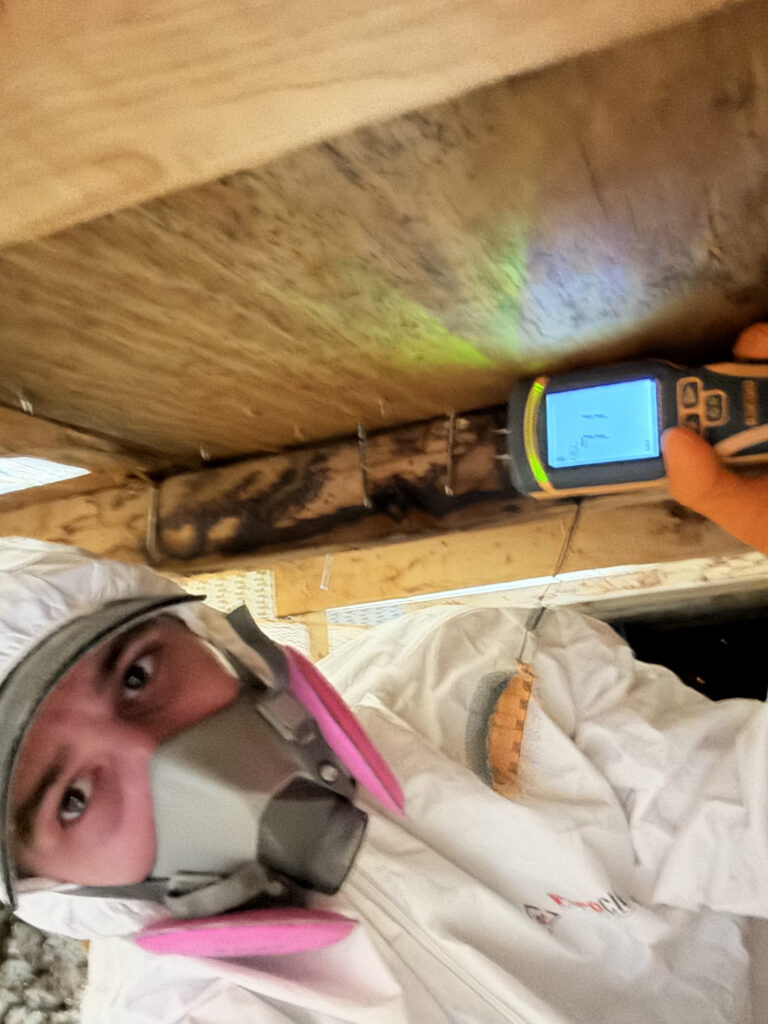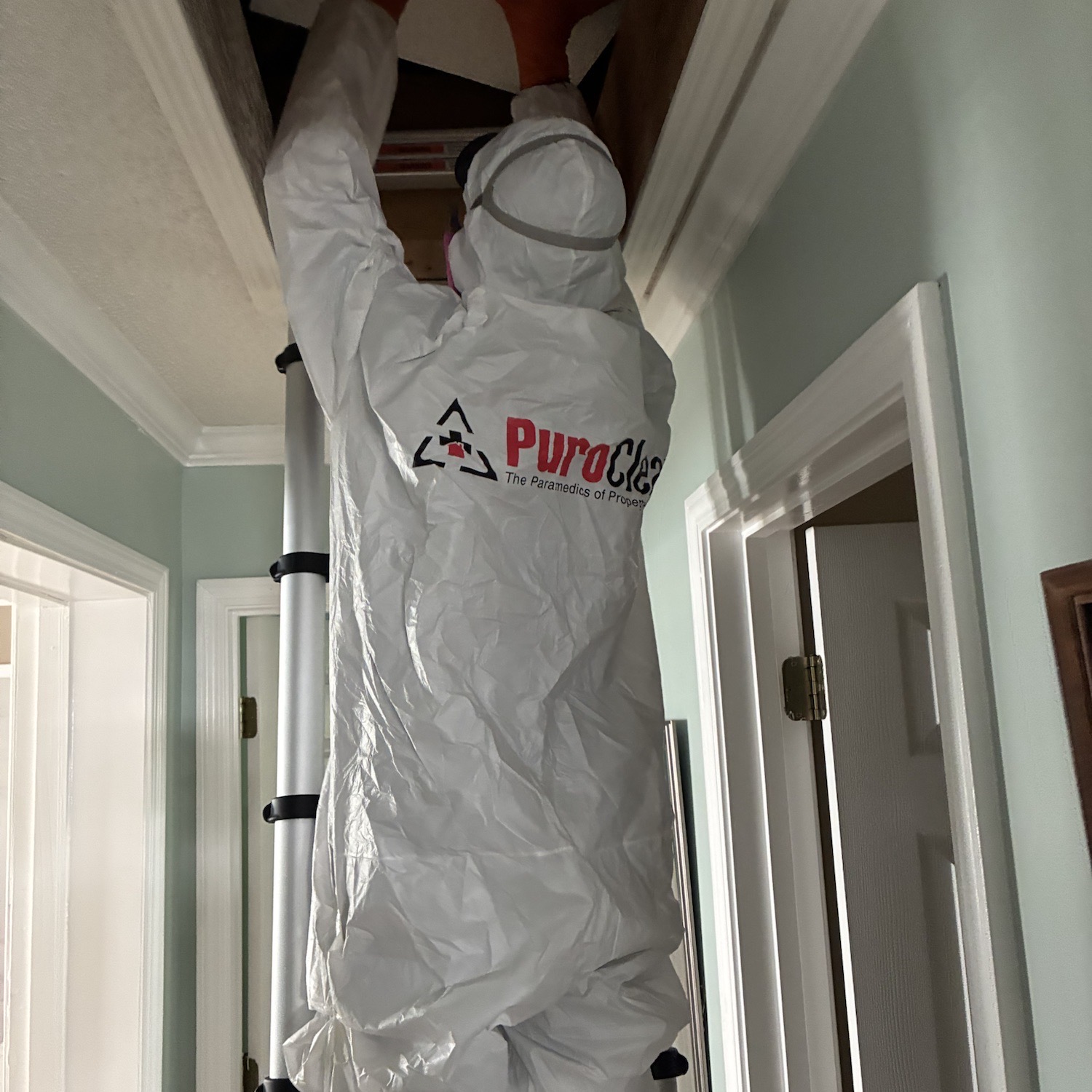
Attic mold is not always obvious from inside your living space. In many Florida homes, the first warning may be a musty odor, a ceiling stain, damp insulation or condensation around attic ductwork.
Why Florida Attics Are Vulnerable to Mold
Florida homes experience extended periods of heat, humidity, heavy rain and seasonal storms. Moist outdoor air can enter an attic through vents, openings and air leaks. Roof leaks, duct condensation and improperly vented exhaust fans can introduce additional moisture.
Mold spores naturally exist indoors and outdoors, but they generally need moisture to begin growing on building materials. The EPA explains that indoor mold growth should be addressed by cleaning up the mold and correcting the water or moisture problem that allowed it to develop.[2]
1. A Persistent Musty or Earthy Odor
A musty odor is one of the most common reasons homeowners begin investigating an attic. The smell may be noticeable near the attic access, in an upstairs hallway or when the air-conditioning system turns on.
The Florida Department of Health advises homeowners to investigate areas where earthy or musty odors are present because these odors may indicate a mold problem.[1] NIOSH also considers visual inspection and the detection of musty odors more reliable than short-term air sampling for finding dampness and mold problems.[3]
Odor alone does not identify its exact source. Damp insulation, stored materials, ductwork, roof decking or another concealed location may be involved. If the source remains unclear, consider a musty odor investigation in Venice .
2. Dark or Irregular Staining on Roof Decking
Visible attic mold may appear as spots, streaks, patches or fuzzy growth. Depending on the material and conditions, it may look black, gray, white, brown, green or another color.
The color does not reliably identify the mold species or determine how hazardous it may be. The CDC notes that molds can appear in many colors, and color alone does not establish whether one type is more dangerous than another.[4]
Pay particular attention to irregular changes across roof sheathing, rafters and trusses—especially near roof penetrations, exterior eaves or areas with a history of leaking.
3. Water Stains or Evidence of a Roof Leak
Water rings, streaks, discolored wood and staining around roof vents can indicate current or previous water intrusion. Even if the roof has already been repaired, affected materials may have remained damp long enough to support growth.
Look for signs around:
- Plumbing and mechanical roof penetrations
- Chimneys, skylights and flashing
- Roof valleys and transitions
- Fasteners protruding through roof decking
- Eaves, soffits and exterior wall connections
- Areas directly above interior ceiling stains
The visible ceiling stain may not be directly below the original entry point because water can travel along framing or roof decking before dripping into the insulation.
4. Damp, Matted or Discolored Insulation
Insulation can conceal evidence of roof leaks and condensation. Wet insulation may appear compressed, matted, stained or uneven compared with the surrounding material.
Moisture can also reduce insulation performance and keep nearby wood or ceiling materials damp. If insulation has been moved, check whether it was disturbed during earlier roof, electrical, HVAC or remediation work.
5. Condensation on Ducts, Pipes or Roof Fasteners
Water droplets on ductwork, pipes, nails or other metal components can indicate that humid air is reaching a surface cold enough for condensation to form.
The EPA identifies visible condensation as a possible sign of elevated humidity and recommends drying the wet surface while correcting the moisture source.[5]
In a Florida attic, condensation may be connected to damaged duct insulation, air leakage, HVAC conditions, ventilation problems or a combination of factors. Our attic moisture and ventilation services in Venice focus on identifying these contributing conditions.
6. Rust or Corrosion on Attic Materials
Rust on exposed fasteners, metal straps, equipment cabinets or duct components can indicate recurring condensation or prolonged moisture. A single rusty fastener does not prove that mold is present, but widespread corrosion can be an important moisture clue.
Other possible indicators include:
- Water droplets forming on nail tips
- Corrosion around mechanical connections
- Staining beneath metal components
- Repeatedly damp wood near affected fasteners
- Water collecting in or near HVAC drain pans
7. Poor or Obstructed Attic Ventilation
Attic ventilation is intended to move air through the space, but the system must be properly designed and unobstructed. Insulation can block soffit vents, roof vents may be damaged and additions or repairs may alter the intended airflow.
Ventilation is not a universal solution for every attic moisture problem. The correct approach depends on the roof assembly, insulation system, mechanical equipment and how the attic connects with the conditioned living space. The U.S. Department of Energy notes that attic moisture intrusion and improper ventilation can be closely connected.[6]
Signs that deserve further evaluation include:
- Soffit vents covered by insulation
- Missing or damaged ventilation baffles
- Uneven intake and exhaust ventilation
- Visible daylight through damaged roof components
- Localized staining near ventilation openings
8. Bathroom or Dryer Exhaust Venting Into the Attic
Bathroom exhaust fans and clothes dryers generate moisture that should be directed outside the building—not released into the attic.
A disconnected, damaged or improperly terminated exhaust duct can deposit warm, humid air directly against insulation and roof decking. Over time, this may produce staining, condensation and localized growth around the discharge area.
Exhaust ducts should be checked for:
- Loose or disconnected sections
- Tears or crushed flexible ducting
- Termination beneath insulation
- Termination near soffit vents instead of outdoors
- Condensation or staining around the duct path
9. Growth That Returns After Surface Cleaning
If staining or suspected growth returns after it has been wiped, sprayed or painted, the underlying moisture condition may still be active.
Cleaning the visible surface without correcting a roof leak, condensation, ventilation problem or other moisture source often provides only a temporary cosmetic change. The EPA warns that mold is likely to return when cleanup occurs without resolving the associated water problem.[2]
Recurring growth may require a more complete evaluation and a defined remediation scope. Learn more about attic mold remediation in Venice, FL .
10. New Problems After Heavy Rain or a Tropical Storm
Wind-driven rain, damaged roof coverings, flashing failures and storm debris can allow moisture into an attic. The entry point may be small, and the resulting damage may not become visible inside the house immediately.
Inspecting the accessible attic after a known roof leak or severe storm can help identify wet insulation, staining and developing moisture problems before they affect a larger area.
Warning signs following a storm include:
- New ceiling or wall stains
- A musty odor that was not previously present
- Wet insulation or roof decking
- Daylight visible through the roof assembly
- Loose vents, flashing or roof penetrations
- Higher indoor humidity after the event
What Should You Do if You Notice These Signs?
- Do not disturb a large suspected area. Avoid aggressive brushing, sanding or demolition before the conditions have been evaluated.
- Document what you observe. Take photographs of stains, leaks and visible moisture if you can do so safely.
- Address active water intrusion. A current roof or plumbing leak requires prompt attention.
- Do not rely on color alone. Black, white or green staining does not identify the mold species or the appropriate response.
- Request an attic-focused inspection. A professional can evaluate accessible conditions and explain whether moisture correction, further assessment or remediation is appropriate.
Attic Medics provides attic mold inspections in Venice and serves homeowners throughout Venice, Florida and surrounding Southwest Florida communities.
Frequently Asked Questions
What does attic mold look like?
Suspected growth may appear as irregular spots, streaks, staining or fuzzy material on roof decking, framing or other surfaces. It may be black, gray, white, brown or green. Appearance alone cannot reliably identify the mold species.
Does a musty smell mean there is mold in the attic?
A musty odor can indicate dampness or mold, but it does not identify the exact source. The attic, HVAC system, wall cavities and other concealed areas may need to be evaluated.
Can attic mold grow without a roof leak?
Yes. Roof leaks are only one possible source. Condensation, elevated humidity, air leakage, poorly insulated ductwork and exhaust fans venting into the attic can also create damp conditions.
Should I test suspected attic mold?
Testing is not always necessary when visible growth is already present. The appropriate step depends on the scope, purpose of the investigation and whether a formal mold assessment is required.
Can I clean attic mold with bleach?
Applying bleach does not correct the moisture source and may be inappropriate for porous building materials. The affected material, extent of growth and underlying moisture condition should be evaluated before choosing a cleanup method.
How quickly should an attic moisture problem be addressed?
Prompt action is recommended. The EPA advises drying wet materials within approximately 24 to 48 hours when possible to reduce the likelihood of mold growth.
Concerned About Attic Mold in Venice, FL?
Attic Medics can evaluate accessible attic conditions, look for moisture contributors and help you understand the appropriate next step.
References
- Florida Department of Health — Mold, Moisture and Indoor Air
- U.S. Environmental Protection Agency — How Can I Tell if I Have a Mold Problem?
- CDC/NIOSH — Mold, Testing and Remediation
- Centers for Disease Control and Prevention — About Mold
- U.S. Environmental Protection Agency — A Brief Guide to Mold, Moisture and Your Home
- U.S. Department of Energy — Guide to Durable Attics