
Attic Moisture & Ventilation · Venice, Florida
Attic Moisture & Ventilation Services in Venice, FL
Florida heat and humidity can trap moisture inside an attic when airflow, insulation, ductwork and roof conditions are not working together. Attic Medics evaluates accessible attic conditions, identifies likely moisture contributors and explains the practical next steps for your Venice home.
- Moisture Sources Evaluated
- Attic Airflow Assessed
- Clear Recommendations
Why Venice homeowners choose Attic Medics

Available 24/7
Call anytime for help with attic moisture, odors and related concerns in Venice.

25+ Years of Experience
Powered by PuroSystems, a property-restoration provider serving customers for more than 25 years.

IICRC Certified
Professional service guided by recognized restoration-industry standards and established practices.

Hot-Humid Climate Expertise
Why Venice Attics Develop Moisture Problems
Venice has a long cooling season, high outdoor humidity and frequent heavy rain. Inside an attic, temperature differences can cause humid air to condense on roof fasteners, ductwork, air-conditioning equipment and roof decking.
Roof leakage is only one possible source. Bathroom exhaust ducts, recessed fixtures, attic access openings and other ceiling penetrations may allow conditioned indoor air to enter the attic. Damaged insulation, leaking ducts and blocked soffit vents can make the condition worse.
Attic Medics evaluates the visible attic as a connected system. The goal is to determine whether the problem is most consistent with water intrusion, condensation, air leakage, insulation deficiencies, ventilation restrictions or a combination of conditions.
- Humidity and condensation indicators
- Soffit, ridge, gable and exhaust ventilation
- Visible insulation, duct and roof-deck conditions
Conditions Worth Investigating
Signs of an Attic Moisture or Ventilation Problem
Common signs include condensation, damp insulation, rusted fasteners, roof-deck staining, musty odors and rooms that are unusually difficult to cool.
Condensation on Ducts or Fasteners
Water droplets, corrosion or moisture marks can develop when humid attic air contacts a cooler surface.
Damp or Compressed Insulation
Wet, flattened or displaced insulation can reduce thermal performance and may indicate leakage or condensation.
Dark Roof-Deck Staining
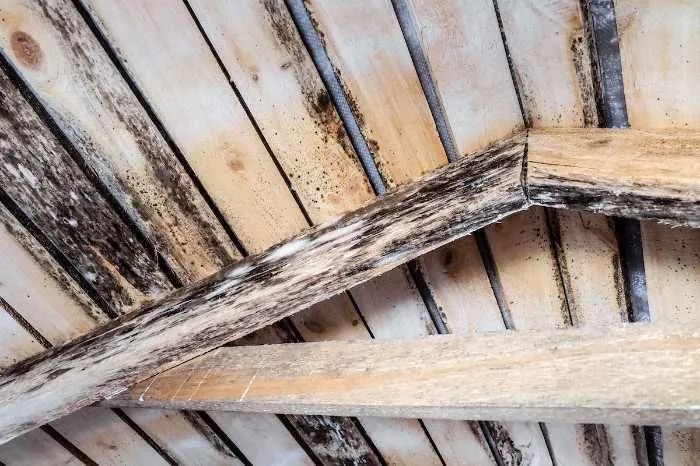
Irregular discoloration may reflect a current leak, an older water event, repeated condensation or microbial growth.
Blocked or Unbalanced Ventilation
Covered soffit vents, inadequate intake or competing exhaust systems can interfere with the intended attic airflow path.
Persistent Musty Odors
Odors near attic access points, closets or ceilings may be associated with damp materials, airflow or microbial activity.
Hot Rooms and Uneven Temperatures
Insulation gaps, duct leakage and air-sealing problems can make rooms uncomfortable while contributing to attic moisture movement.
Attic-Focused Evaluation
What We Evaluate During an Attic Moisture Inspection
We examine accessible attic areas for the visible conditions that help explain how moisture is entering, forming or remaining inside the attic.
Moisture Indicators
Staining, damp materials, condensation and evidence of current or previous water intrusion.
Ventilation Pathways
Visible soffit, ridge, gable and powered ventilation components, including apparent restrictions.
Insulation & Air Leakage
Accessible insulation conditions and openings that may allow indoor air to enter the attic.
Duct & Roof Conditions
Visible ductwork, penetrations and roof-deck conditions that may be contributing to attic moisture.
Evaluation is limited to accessible and visible areas. Specialized roofing, HVAC, electrical or engineering work may require an appropriately licensed professional.
A Cause-First Approach
From Attic Symptoms to a Practical Correction Plan
Our process is designed to distinguish the visible symptom from the condition creating it. That helps prevent isolated repairs that fail to address the larger attic environment.
Evaluate the Attic
We document visible moisture indicators, insulation, airflow, ductwork and roof-deck conditions in accessible areas.
Identify Likely Contributors
We explain whether the observations appear connected to leakage, condensation, air movement, insulation or ventilation.
Prioritize the Next Steps
We outline a practical sequence and identify when roofing, HVAC or another licensed specialist may be required.
Common Questions
Attic Moisture & Ventilation FAQs
Straightforward answers for Venice homeowners dealing with attic humidity, condensation and airflow concerns.
Can Florida humidity cause moisture in an attic?
Yes. Humid air, temperature differences, duct conditions and air leaking from the living space can contribute to condensation or damp attic materials.
Will adding attic vents solve a moisture problem?
Not necessarily. Additional vents will not repair a roof leak, seal leaking ducts, restore displaced insulation or stop indoor air from escaping through the ceiling. The moisture source and existing ventilation design should be evaluated first.
Can attic moisture lead to mold growth?
Persistent moisture can create conditions that support microbial growth on wood, paper-faced materials and other susceptible surfaces. Visible growth or unexplained staining should be evaluated through an attic mold inspection in Venice .
Why does my attic smell musty?
Musty odors may be associated with damp insulation, microbial activity, stored materials or air entering from another area. A musty odor investigation focuses on identifying the likely source instead of masking the smell.
Do you perform roofing or HVAC repairs?
We explain the accessible attic findings and recommend appropriate next steps. Work outside our service scope may require a properly licensed roofer, HVAC contractor, electrician, engineer or other specialist.
Should moisture be corrected before mold remediation?
The moisture source should be identified and incorporated into the overall correction plan. Otherwise, the conditions that supported growth may remain after attic mold remediation .
Protect Your Attic
Concerned About Heat, Humidity or Moisture in Your Venice Attic?
Request an attic evaluation to better understand the visible conditions, likely contributors and appropriate next steps.